

The Oculus Go is dead, and virtual reality is better for it - hendersonfachur56
Oculus stopped selling its first appearance-level virtual reality headset on Tuesday, the Optic Go. Usually this kinda announcement would be met with nostalgic retrospectives and beers poured on the floor. Much lamenting, and all that. Even the worst products usually capture a rose-dark sendoff.
But virtual reality is fortunate without Go around, and so is Eye.
[Promote reading: The best VR headsets ]
The Gear VR era
You'll convey no encomium from me. Non a fond uncomparable, in any event. Oculus Go was a act as for the mass market that completely ununderstood the mass market. Perfect down the barrel of the $600 Oculus Rift, the goal was to become people into virtual reality as chintzily Eastern Samoa contingent. Break down the barriers. Build the ecosystem.
That work began with the Samsung Gear VR. Using an existing Samsung phone to magnate a VR experience seemed fresh circa 2015, when Gear VR debuted. There were no consumer-facing VR headsets at that point in time. The Rift and Vive were still a year out, and it was exciting to have a real product in-manus—and for cheap, if you already owned a Samsung phone. $100 for VR? Not a bad deal.
And IT's Worth remembering that Gearing VR didn't appear so limited in those days. Information technology didn't have hand-tracking—but then, neither did the Oculus Rift at the clock. Titans of Space , Dreadhalls , Esper 2 , Support Speaking and Nobody Explodes , all the best of the early Rift games came over to Gear VR in some form because the platforms were fundamentally the same.
Then room-scale VR came along. Little Phoeb years later it already seems like ancient history, only thither was a meter when Oculus didn't believe in room musical scale. There was a time when every Eye show took plaza seated with an Xbox accountant in-hand. The now-essential Oculus Touch controllers shipped nine months after the Rift, every bit Optic retrofitted its tracking system to catch up with Valve and the HTC Vive.
Virtual realness changed. Not overnight, maybe, but it changed. I can't remember the last prison term I played a major VR release sitting down with an Xbox accountant. And eventually that was still the experience offered first by Gear VR and then later by Oculus Go.
Going nowhere
Released in 2018, Spell fundamentally repackaged the Gearing VR concept without the need for a separate earphone purchase. Not a extraordinary melodic theme, perhaps. At $200, Oculus Go seemed downright affordable adjacent to 2018's Falling ou and Vive prices. And if all you wanted was to watch 360-degree videos? Sure, Go worked.
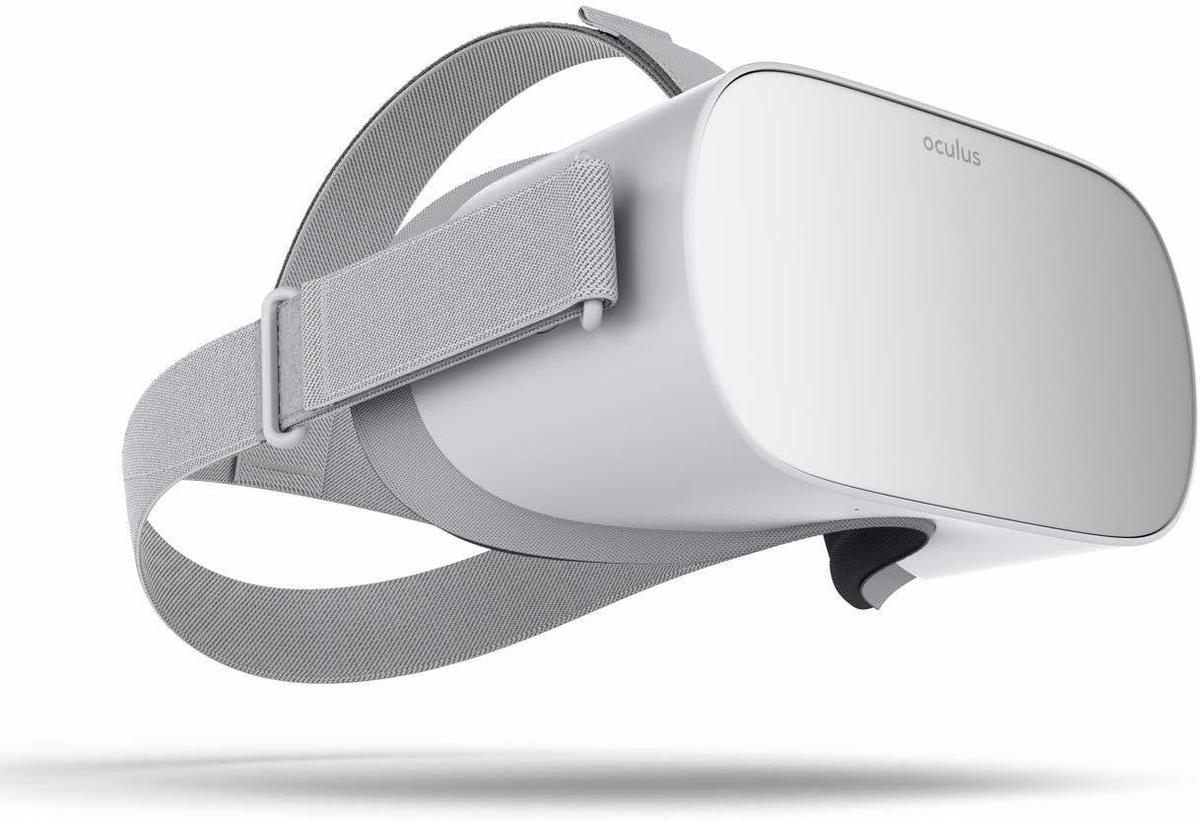 Oculus
 As I said, it was a dally for the mass market. A represent for Facebook's "social VR," perchance. If your goal is to deal a billion VR headsets…well, you're non going to do that by merchandising to populate World Health Organization play video games. Even the popular consoles top out around 100 million units. The (seemingly provable) solution: Make over an affordable headset that appeals to a different audience.
But as it turns out, it's hard to sell people connected virtual realism if you funnies knocked out everything that makes virtual world particular. Even by 2018 standards, Oculus Go provided a dismal experience. Seated, with a lustreless presentation and a mediocre battery, Go's single strength was its lack of cabling. Like Gear wheel VR, that made it great for demoing to first-timers. You could take Travel anywhere, and a hell of a lot easier than you could drag your Rift to a friend's place.
Buy one, though? That was harder to commend. Rift games no yearner successful it over to Oculus Go. There was no Lonesome Echo along Go, nor straight-grained the potential for information technology. The platforms were fundamentally different. Tone at the Top Selling Optic Go games , and IT's remarkable how many of them are still games released for Gear VR in 2015. The Rift struggled for long time to produce a solid software lineup even with enthusiastic developers arse it. Oculus Go never had a chance.
Besides, Oculus Go didn't feel like a gaming device. As I same, this wasn't aimed at the same people as the Rift and Vive. Maybe you'd play Irascible Birds or Thumper , but Go was primed for media expenditure. Ostensibly that meant viewing 360-stage videos of the Idealistic Canyon and the White House and so much. Realistically, I'm guessing a lot of people used the Go for *ahem* adult viewing.
Essential vices aside, there simply wasn't much to do with Oculus Croak. It had no room for growing, none really potential. It was a snapshot of VR circa 2015, frozen in time.
And it muddied the waters. Trying to convey to potential buyers that No, the Optic Live experience was nothing like the full Rift/Vive experience? That no, the plug they'd heard didn't apply to Go? That was cunning. People bought Go thinking they'd finally "come into" VR, just American Samoa Facebook and Optic intended—but Go gave them little reason to research or be excited about the platform.
It was a standstill.
The rightful heir
Just a year later Oculus Quest released, and Go's death was all but inevitable. At $400, Request wasn't "entry-level" like Go around—just information technology replicated the egg-filled room-scale desktop experience. It had hand-tracking. IT had top-tier Rift games like Cadence Saber and Angle Brush and Vacation Simulator . Oculus won over the mass market—non by churning extinct meretricious headsets that captured the barest glimmer of VR's potential, but by catering to enthusiasts in a new form factor.
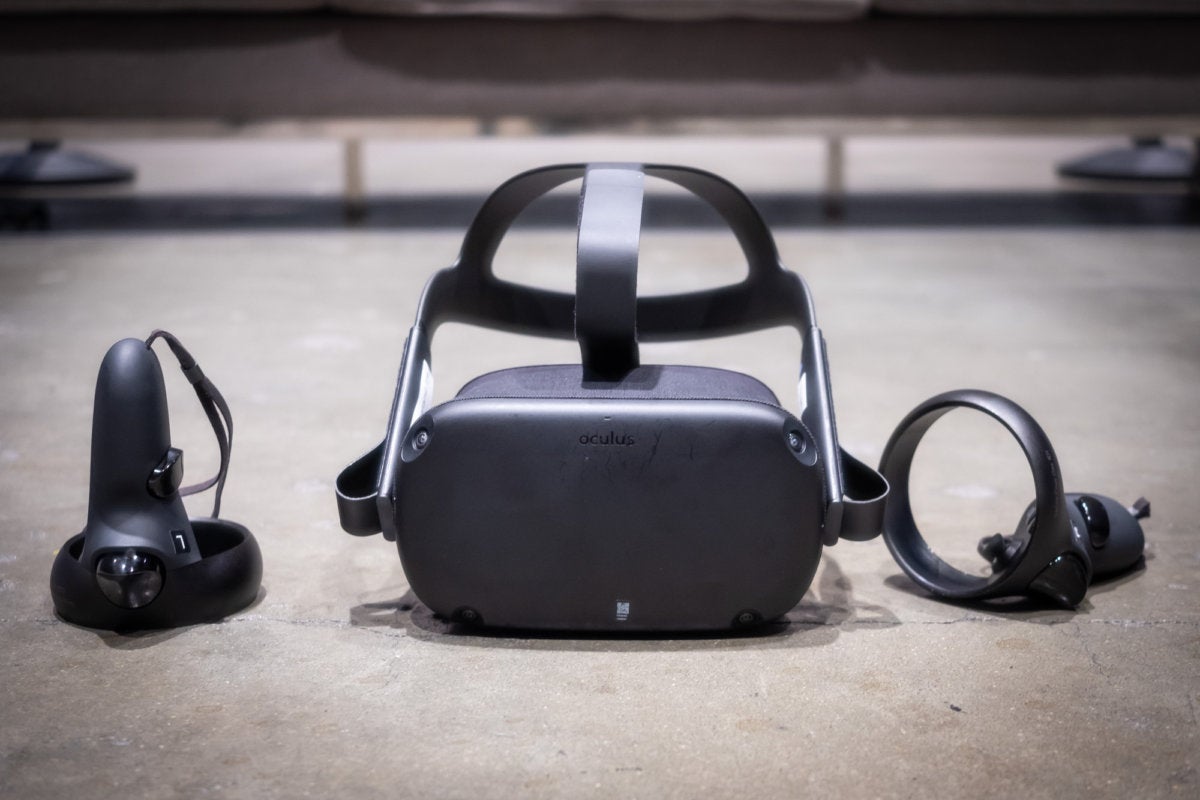 IDG / Daniel Masaoka
 Production shortages mean IT's still near-impossible to buy Quest. And with Quest constantly sold out since November, Oculus Run along's presence became even more of a pain in the neck. I Don River't make out how many multiplication this past holiday I had to tell people not to bargain Hold out, that no , IT wasn't just a cheaper version of Quest. That yes, they look pretty similar, but I promise you won't be happy with Go! Over and over and over.
It was luxuriously time Eye Go died. Go would've been a colourful piece of hardware in 2015, merely it was mediocre by the standards of 2018 and honorable anachronistic in 2020. This funeral is nothing just a formality—and i that arguably should've coincided with Quest's eject last year, when Go's end would've mat up more like a natural stepping stone betwixt Appurtenance VR and Quest and less the like some vestigial third vertical few the great unwashe embraced.
Oculus is certainly trying to position it as the former, writing that "Oculus Go made new experiences possible for people roughly the mankind, and it laid the groundwork for Eye Request." But actually this feels more like the conclusion of an era, the stop of an earlier Optic with earlier ideas about VR's future. Three paths diverged in the forest—Get, Pursuit, Rift—and only two of them were worth following.
Oculus Go was an experiment worth hard though, if only to prove the vault holding virtual reality back up wasn't price so much American Samoa quality . With Quest still sold out, leastways Oculus put up take solace well-read it yet stumbled connected the outside path forward.

Source: https://www.pcworld.com/article/399329/the-oculus-go-is-dead-and-virtual-reality-is-better-for-it.html
Posted by: hendersonfachur56.blogspot.com
0 Response to "The Oculus Go is dead, and virtual reality is better for it - hendersonfachur56"
Post a Comment